
There are a multitude of strategies businesses can employ to reach their business goals, depending on each businesses unique environment, target audience and industry position.
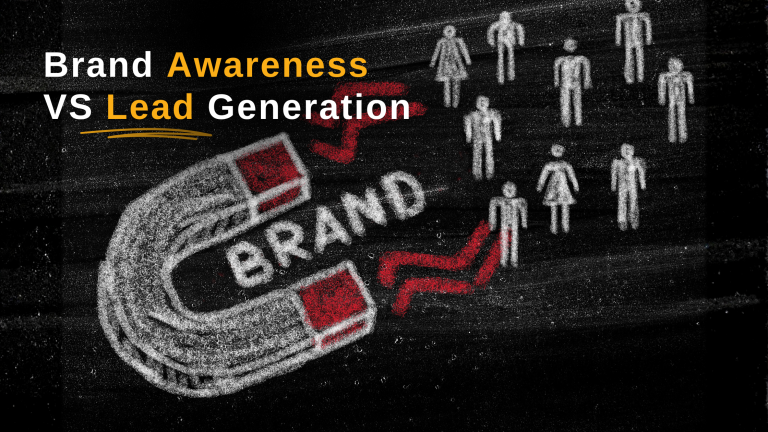
Brand awareness and lead generation are two notable strategies every business should consider for steady growth and to ensure business goals are being met. And whilst seemingly similar to one another, both strategies serve different purposes.
What is Brand Awareness?
Brand awareness operates on a more general scope, with the goal of increasing the general public’s familiarity with a brand. Once familiarity is obtained, the focus expands and shifts to establishing trust and positive sentiment overtime.
The process of achieving brand awareness can be broken down into four stages:
- Recognition
- Recall
- Top of mind
- Preference
Online and offline brand awareness strategies can look like:
- Paid advertising
- SEO (search engine optimisation)
- Social media marketing
- Sponsorship opportunities
A key element of brand awareness not to be overlooked is the act of brand storytelling. Business should work to establish a strong visual identity which customers can recognise, recall, keep top of mind and eventually preference over other brands. Brand storytelling also cultivates a relationship of trust and sentiment overtime.
59% of all consumers prefer to buy new products or try new services from brands they already recognise! (Psst…this applies in a B2B environment too)
When it comes down to things, initially it’s all about visibility and recognition. It’s the first impression your business has on the consumer – the first handshake or “Hi, my name is…” moment. And…first impressions count.
What is Lead Generation?
Whilst similar in nature to brand awareness, lead generation focuses on capturing attention and turning interest into measurable prospects. It’s about identifying those with their eye already on your business – or actively seeking solutions like yours – and encouraging them to take action.
In marketing, a “lead” is typically considered a potential customer who has shared their contact information. This allows a business to continue the conversation, nurture interest and guide the “lead” into becoming a purchase decision.
How it works:
- Attract audience interest
- Capture information
- Qualify leads
- Nurture and convert
Fun fact: companies with a blog generate 67% more leads than those who don’t.
From a broader perspective, lead generation improves sales cycle efficiency by focusing on the strongest and most valuable prospective customers. This ensures resources are invested where they’ll deliver the greatest return.
The Intentional Overlap
With these two strategies it’s not one or the other – they’re interdependent. Strong brand awareness holds open the door for highly efficient lead generation – why? – because prospect customers are far more likely to engage with a brand they know and trust. On the other hand, a well-produced lead generation campaign reinforces brand awareness and contributes to customer recognition.
Strategically Meeting Business Goals
The question isn’t which one to employ, but how to incorporate both to strategically meet business goals.
- If your goal is market entry or expansion: prioritise brand awareness to build trust and credibility.
- If your goal is revenue growth/driving sales: focus on lead generation to feed your pipeline.
- For long term, sustainable growth: form an integrated strategy where awareness campaigns stimulate interest, and lead generation tactics capture said interest and drive action.